
Buying a property in France
A clear, step-by-step guide for international buyers

Your French property journey
Buying in France is exciting, but the legal process may feel unfamiliar. This guide explains the usual stages, the people involved and the points to prepare for, from making an offer to receiving the keys.
At a glance
- Make a written offer through the estate agent
- Choose a notaire and agree the preliminary contract
- Pay any agreed deposit into the notaire’s client account
- Use the 10-day cooling-off period, where it applies
- Allow the notaire to complete the legal checks
- Transfer the balance and sign the final deed
- Receive your ownership certificate and keys
Typical timescale: around three to four months, although every purchase is different and some transactions take longer.
Who does what?
The estate agent: brings buyer and seller together, helps to gather the information required for the file and supports communication throughout the transaction.
The notaire: is a French public officer who prepares or authenticates the legal documents, carries out the required checks, receives the purchase funds and registers the transfer of ownership. The notaire acts impartially rather than solely for one party.
Your adviser: may be a tax, legal, financial or currency specialist. Advice may be especially useful if you are buying jointly, through a company, using finance or considering inheritance and estate-planning implications.
Can buyer and seller use different notaires?
Yes. You may appoint your own notaire even if the seller has already chosen one. The two notaires work together and share the notarial remuneration; this does not normally double the buyer’s acquisition costs.
Step 1: Making an offer
Once you have found the right property, your offer is normally made in writing through the estate agent. It should clearly identify the property, the price offered, how the purchase will be funded, any important conditions and the period for which the offer remains valid.
You will usually be asked to provide proof of identity and evidence of your funding position. If your purchase depends on a mortgage, the offer and later preliminary contract should reflect this accurately.
Before you sign
- Read the offer carefully: an accepted written offer can have legal consequences.
- Make sure any essential requirement is raised early - for example finance, planning permission or the sale of another property.
- Do not pay money directly to the seller to ‘secure’ the offer.
- Ask for clarification before signing anything you do not fully understand.
How long does an offer last?
There is no standard 30-day rule. The offer should state its own validity period; in practice this is often a few days or one to two weeks. If the seller makes a counter-offer, the original offer normally falls away.
Step 2: The preliminary contract
After the offer is accepted, the next key document is usually a compromis de vente (a bilateral agreement) or a promesse de vente (often a unilateral promise). The precise legal effect differs, so rely on the wording of the document and the notaire’s explanation rather than the label alone.
The preliminary contract may be prepared by a notaire, an estate agency or a lawyer, depending on the circumstances. It records the agreed price, the parties’ commitments, the anticipated completion date, the property information and any conditions that must be satisfied before completion.
Conditions suspensives
These are conditions that allow the transaction not to proceed if a specified event does not occur. They must be drafted carefully and included before the contract is signed. Examples may include:
• Obtaining a mortgage on stated terms
• Obtaining planning or other administrative permission
• A satisfactory outcome to a specific legal or technical enquiry
• The sale of another property, if the seller agrees to this condition
If mortgage finance is being used for a residential purchase, the preliminary contract must state this and include the relevant finance condition. Buyers must then follow its deadlines and requirements precisely.
Language and interpreters
French deeds are prepared in French. The notaire must be satisfied that every party understands the content and consequences of the document and is giving free and informed consent.
If the notaire is sufficiently fluent in the buyer’s language, a separate interpreter may not be necessary. If the notaire is not, an interpreter chosen by the parties will be required and their presence at the signing will be recorded in the deed. The notaire handling the file should confirm in advance what form of interpretation is acceptable and whether the interpreter must meet any particular requirements.
Our advice
Tell the notaire at the start of the transaction if you are not confident reading and discussing legal French. Do not rely only on informal translation by a friend or estate agent. Ask for the draft documents early and arrange any interpreter required by the notaire in good time.
Step 3: Deposit and acquisition costs
The preliminary contract frequently provides for a deposit or indemnity, often between 5% and 10% of the purchase price, although the amount and payment arrangements depend on the contract. Payment is not what makes a compromis valid, but where a deposit is agreed it is normally transferred to the notaire’s regulated client account and held until completion.
At completion, the deposit is credited towards the price. If you withdraw during an applicable cooling-off period, or a properly drafted condition suspensive fails through no fault of your own, the contract will determine how and when the money is returned.
Allow for the full cost
In addition to the purchase price, the buyer normally pays acquisition costs. These are often described as ‘notaire’s fees’, but most of the total consists of taxes and registration charges rather than the notaire’s remuneration. For an older property, a broad estimate is often around 7% to 8% of the price, but the amount varies by property, department and transaction.
For an estimate, use the ANIL acquisition-cost calculator and ask the notaire for a transaction-specific statement.
• Purchase price and acquisition costs
• Currency conversion and international transfer charges
• Survey or specialist reports, if commissioned
• Mortgage, insurance or guarantee costs
• Interpreter or translation costs, if required
• Building insurance and initial utility or tax payments
Payment security
Always verify the notaire’s bank details using a trusted, independent contact route before transferring funds. Be alert to last-minute emails requesting payment to a different account.
Step 4: The 10-day cooling-off period
A non-professional buyer purchasing residential property normally benefits from a 10-calendar-day cooling-off period after formal notification of the signed preliminary contract. The period begins the day after the contract is formally notified or delivered in the legally prescribed way - not simply when everyone signs it.
During this period, the eligible buyer may withdraw without giving a reason, provided the withdrawal is notified correctly and in time. Follow the instructions in the contract and contact the notaire immediately if you intend to withdraw.
Important exceptions
The cooling-off protection does not apply to every buyer or every type of transaction. Land-only purchases, business or professional acquisitions and purchases through a company can be treated differently. An SCI purchase should not be described as automatically included or excluded: obtain advice for the particular structure and purpose.
After the cooling-off period, the transaction is governed by the preliminary contract. A buyer who withdraws without a contractual or legal basis may lose the deposit and face other remedies or penalties. The seller is generally committed once the relevant contract has been concluded. The exact consequences depend on the document, so avoid treating “10%” as an automatic universal penalty.
Step 5: The notaire’s checks
Between the preliminary contract and completion, the notaire assembles and checks the legal file. Depending on the property, this may include:
• Title, ownership history, mortgages and other registrations
• Planning status, boundaries, rights of way and easements
• The statutory diagnostic reports supplied by the seller
• Co-ownership information for an apartment or copropriété
• Local authority and, where relevant, agricultural pre-emption rights
• The parties’ civil status, identities and source-of-funds information
• The fulfilment of the conditions suspensives
This stage often takes several weeks because information must be obtained from public bodies and other organisations. Delays do not necessarily indicate a problem, but buyers should respond promptly to document and information requests.
Useful preparations while you wait
• Review the diagnostic reports and ask questions about anything unclear.
• Arrange buildings insurance to take effect when ownership and risk transfer.
• Plan the final transfer early and allow for bank limits, compliance checks and currency timing.
• Confirm how you will sign and whether a power of attorney or interpreter is needed.
• Ask for the draft final deed in enough time to read it and raise questions.
• Arrange a final visit to the property shortly before completion.
Step 6: Signing the final deed
The final deed is the acte authentique de vente. Before completion, the notaire will send a completion statement showing the balance required. Cleared funds must normally be in the notaire’s account before signing.
Buyer and seller sign before the notaire, either personally or through an authorised representative. If you cannot attend, ask early about a power of attorney. Do not assume that a video call alone replaces the required notarial signing procedure; the notaire will confirm the permitted arrangement.
Final inspection
Visit the property as close as practical to completion. Check that it remains in the agreed condition, that included items are present, that the property is vacant if required and that no obvious damage has occurred. Record meter readings and photograph them where possible.
At the appointment
The notaire explains the deed and checks that the parties understand and agree to it. Once the deed has been signed and the funds have been accounted for, the buyer normally receives the keys and an attestation de propriété - the certificate confirming ownership while the registered copy of the deed is being processed.
Step 7: After completion
• Keep the attestation de propriété safely; it is useful evidence of ownership.
• Confirm that building insurance is active.
• Transfer or open the electricity, water, gas, internet and other accounts required.
• Check how taxe foncière has been apportioned under the deed and note future tax obligations.
• Update your French and overseas advisers if the purchase affects tax, inheritance or estate planning.
• Wait for the registered copy of the deed and the notaire’s final account. This may take several months.
The notaire retains the original deed (the minute) and registers a copy with the land registration service. Under current official guidance, the original is retained by the notarial office for 75 years before transfer to the public archives.
Buyer’s checklist
☐ Passport or national identity document for every buyer
☐ Proof of address and civil-status information
☐ Proof of funds and full finance details
☐ Bank account and currency-transfer plan
☐ Chosen notaire and confirmed language arrangements
☐ Any essential conditions raised before the preliminary contract
☐ Independent survey or specialist advice, if required
☐ Buildings insurance arranged for the correct date
☐ Final funds transferred and received in time
☐ Final inspection and meter readings completed
And finally...
Collect the keys, open something sparkling and begin your new chapter in Occitanie. We will be delighted to welcome you home.
How Occitanie Properties supports you
We guide you through the practical stages of the purchase, keep communication moving between the parties and help you understand what happens next. We can introduce trusted local professionals, assist with final arrangements and share the regional knowledge that makes settling into life in Occitanie easier.
Please remember that the estate agent cannot replace the notaire or provide individual legal, tax, financial or surveying advice. Where specialist advice is needed, we will encourage you to obtain it from an appropriately qualified professional.
Further information
• Service Public - making an offer
• Service Public - preliminary contracts
• Service Public - final deed of sale
• Service Public - mortgage condition
• Notaires de France - language and interpreters
• ANIL - acquisition-cost calculator
Important: This guide gives a general overview of a typical purchase of an existing residential property in France. It is not legal, tax or financial advice. Procedures, costs and legal rights vary according to the property, buyer, ownership structure and contract. Always follow the advice and instructions of the notaire and your own professional advisers. Information reviewed August 2026.
Looking for a home in the South of France?
At Occitanie Propriétés, we don't just write about life here - we help you make it your own. Explore our selection of houses and character properties for sale across Occitanie, from traditional village homes to countryside estates. These are just a few of the beautiful homes currently available...

House for sale
€785,000

House for sale
€330,000

Village house for sale
€525,000
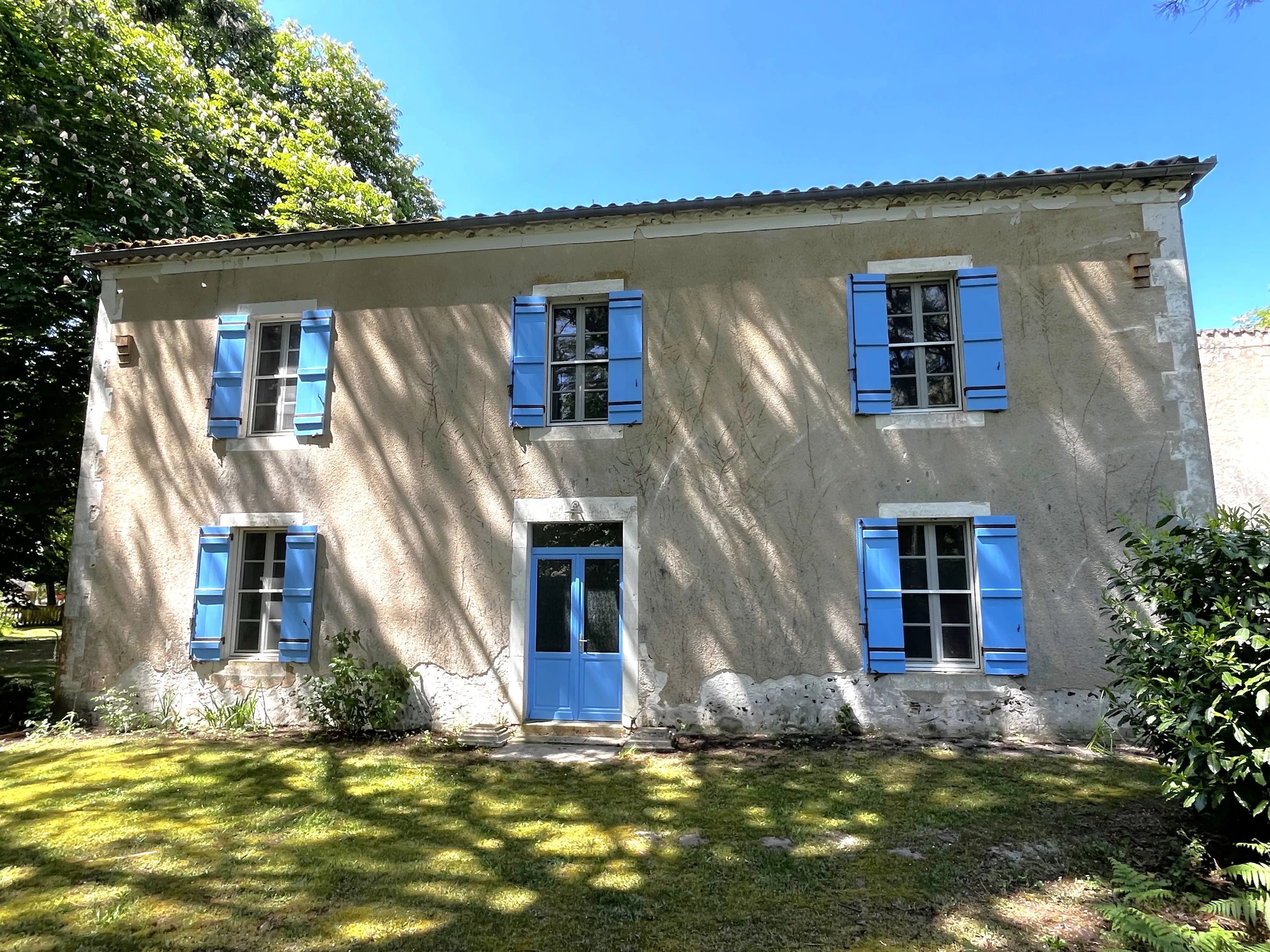
Farm for sale
€372,500

Townhouse for sale
€395,000

Property for sale
€599,000

Village house for sale
€135,000

House for sale
€440,000

Manor house for sale
€695,000

House for sale
€259,990

Detached house for sale
€220,000

Castle for sale
€850,000

Village house for sale
€350,000

Chalet for sale
€335,000

Bed and breakfast for sale
€574,500

House for sale
€529,000

House for sale
€399,000

Bastide for sale
€375,000

Townhouse for sale
€269,000

Property for sale
€1,260,000
